PCB Design

Low Voltage Disconnect PCB.

A battery protection board that disconnects the load when voltage falls below a safe threshold.

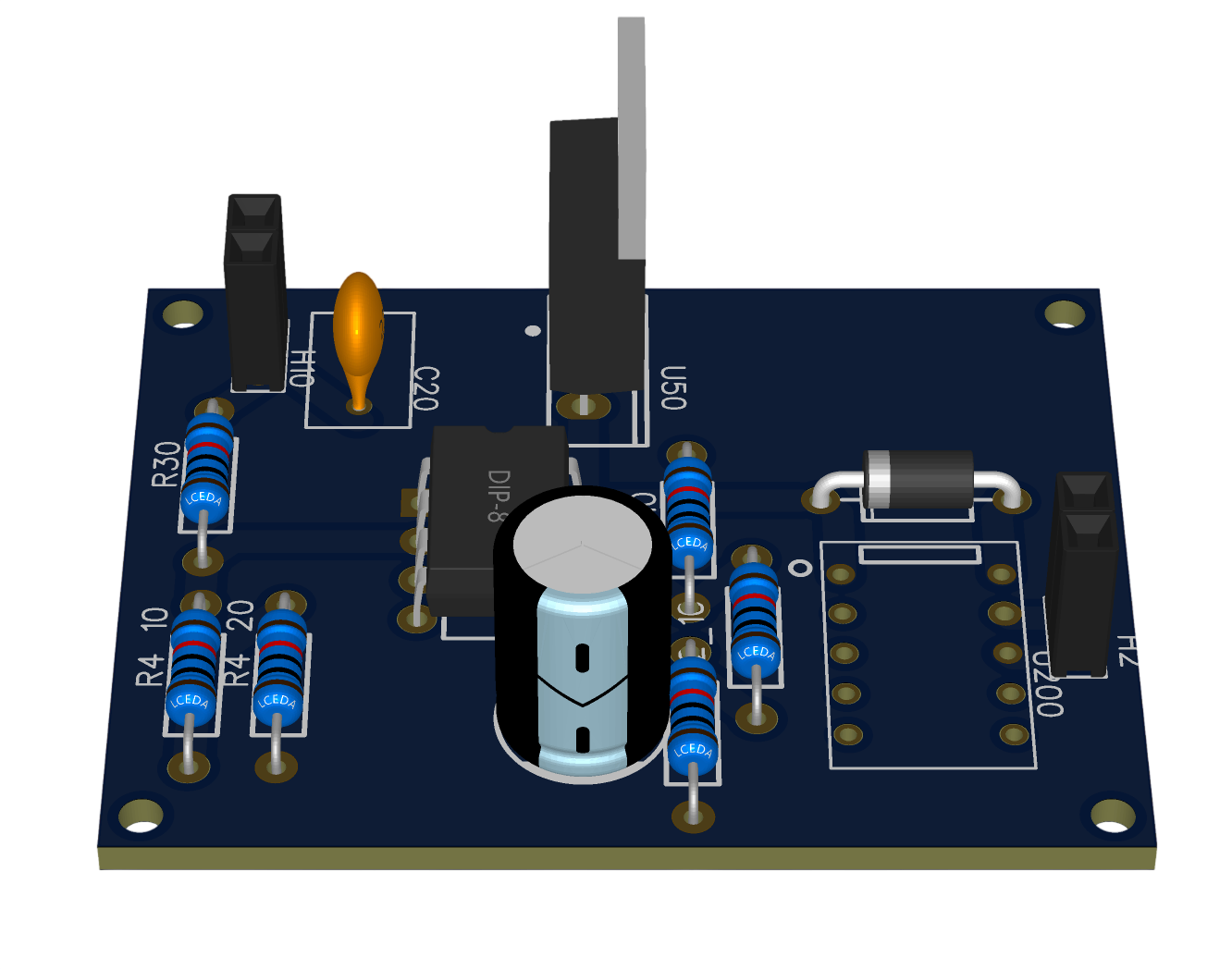
3D render of the Low Voltage Disconnect PCB.

This custom Low Voltage Disconnect PCB was developed with Noah Rigmaiden for our Collaborative Lab Design class. The goal was to create a compact and practical way to protect rechargeable batteries from over-discharge.

The board monitors battery voltage and automatically disconnects the load when the voltage drops below a safe threshold. This helps prevent the batteries from operating outside their recommended range and supports better long-term reliability.

The completed PCB was successfully tested and worked as expected: it supplied power while the input voltage remained in the safe range and cut off the output once the voltage fell below the limit.

How It Works

Engineering notes.

Rechargeable batteries can lose capacity or suffer permanent damage when they are discharged below their recommended operating range. In a battery-powered system, the load can continue drawing current even after the battery reaches an unsafe voltage.

This project addressed that problem with a compact PCB that automatically disconnects the load when the battery voltage falls below a defined threshold. The cutoff behavior protects battery life without relying on the user to manually disconnect the system.

The board sits between the rechargeable battery and the load. A voltage sensing stage monitors the battery input, while a threshold detection stage determines whether the voltage remains inside the safe operating range. That decision controls a switching element on the load path.

  • When the battery voltage stays above the threshold, the load remains connected.
  • When the battery voltage falls below the threshold, the board disconnects the load.
3D render of the Low Voltage Disconnect PCB.

The project started with the need for a small and reliable battery protection board. Several possible approaches were discussed before selecting a custom PCB, which offered better integration, size control, and reliability than a loose wiring solution.

The work included schematic design, component selection, PCB layout, and hardware testing. The board had to remain compact while still being practical to assemble, inspect, and validate on the bench.

Verification was performed through bench testing while changing the input voltage across the operating range. The output remained connected while the battery voltage stayed above the cutoff threshold and disconnected once the voltage dropped below it.

Testing also confirmed that the board could supply power safely during normal operation and that the automatic cutoff behavior worked as intended.

if battery_voltage < threshold:
    disconnect_load()

The final PCB worked as intended during testing. When the battery voltage stayed above the cutoff point, the board supplied power to the load normally. Once the voltage dropped below the threshold, the board disconnected the output to help prevent over-discharge.

The working prototype validated the original design idea and showed how a small custom PCB can improve reliability, integration, and battery protection in a power system.

Interactive Demo

Cutoff Simulator.

Adjust the battery voltage to see how the load remains connected above the cutoff threshold and disconnects below it.

Battery Voltage

12.0 V
80%
Voltage
12.0 V
Cutoff Threshold
11.0 V
Status
CONNECTED

The battery remains within its safe operating range. The load stays connected.